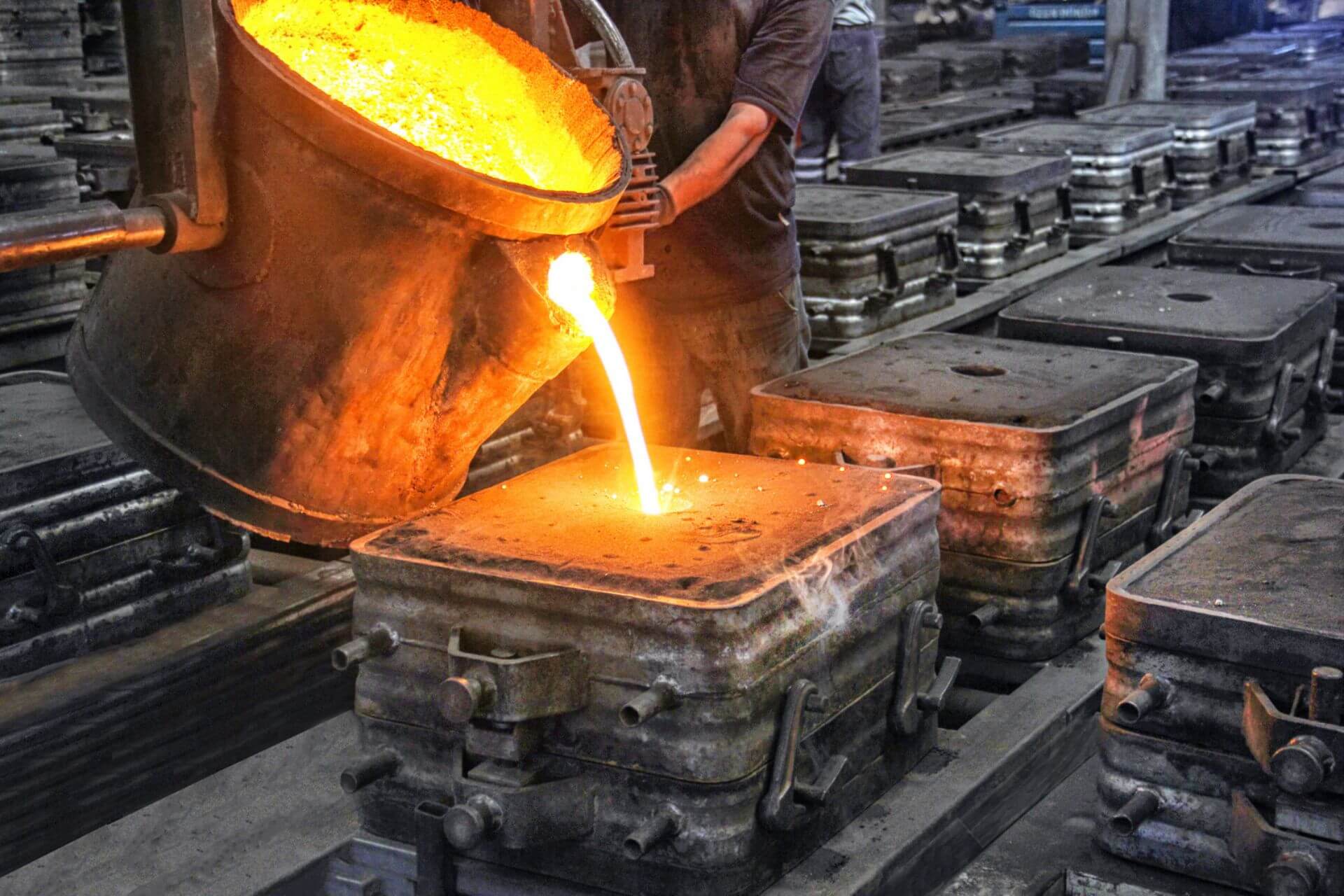
Wisconsin has poured metal for more than a century. Milwaukee, the Fox Valley, and towns like Waupaca and Neenah grew up around foundries that make castings for engines, tractors, pumps, valves, and the manhole covers you drive over every day. It’s steady, skilled work, and plenty of families have had two or three generations on the same foundry floor. It’s also some of the loudest work in the state. A lot of long-time foundry workers start to notice it in their hearing years before they retire, usually when a spouse complains about the TV or a grandkid gets tired of repeating themselves.
Table of Contents
- Why Wisconsin Is Foundry Country
- How Loud a Foundry Really Gets
- The Foundry Jobs With the Most Noise
- Heat, Sweat, and Hearing Protection
- More Than Noise: Metals, Fumes, and Your Ears
- Signs Your Hearing Is Slipping
- Workers’ Compensation for Foundry Hearing Loss in Wisconsin
- What Foundry Workers Can Do Next
- Sources
Why Wisconsin Is Foundry Country
Wisconsin has long been one of the leading metal casting states in the country. Gray iron, ductile iron, steel, aluminum, and brass all get poured here, and the castings end up in farm equipment, trucks, construction machinery, and city water systems all over the world. For a lot of small towns, the foundry was the biggest employer for decades, and a job there was a good, steady living.
That history matters when we talk about hearing loss. Many people who worked in Wisconsin foundries in the 1970s, 80s, and 90s did it with little or no hearing protection. Hearing conservation programs were a lot thinner back then, and most workers simply got used to the noise because that’s what everyone did. The trouble is that the damage from those years doesn’t go away, even if the plant got quieter or safer later on.
How Loud a Foundry Really Gets
A foundry isn’t loud in one corner. It’s loud almost everywhere you walk. Molding machines jolt and squeeze, the sand system rumbles in the background all day, shakeout decks shake castings loose with a constant pounding, and the cleaning room is full of grinders and chipping hammers going at the same time. Many of these jobs run well above 100 decibels, and some, like chipping and air arc gouging, can go higher still.
To put that in perspective, NIOSH recommends keeping noise exposure under 85 decibels averaged over an eight hour shift. Every 3 decibels above that cuts the safe time in half, which adds up fast. At 100 decibels, the recommended limit is about 15 minutes a day. A full shift on a shakeout line or in a grinding booth can blow past that before the first coffee break, and then do it again the next day, and the day after that, for years.
The Foundry Jobs With the Most Noise
Not everyone in a foundry gets the same dose of noise, but very few people there get a quiet day. Shakeout operators probably have it worst, standing beside vibrating decks that break castings out of their sand molds hour after hour. The grinders and chippers in the cleaning room aren’t far behind, since their tools are loud on their own and the room bounces that noise right back at them. Molders and coremakers running jolt-squeeze or automatic lines, shot blast operators, and the people working the melt deck near cupolas, furnaces, and blowers all spend their shifts in serious noise too.
Then there are the jobs people tend to forget. Maintenance workers may not stand next to one machine all day, but they move through every loud area of the plant, often while the equipment is running. Forklift and crane operators are out on the floor from start to finish. Their exposure doesn’t look dramatic on any single day, but over a twenty or thirty year career it adds up just the same.
Heat, Sweat, and Hearing Protection
The temperatures are extreme so wearing hearing protection can be uncomfortable. Earmuffs can be uncomfortable due to the heat and sweat building up in the seal of the earmuff. Foam earplugs can also be uncomfortable as the sweat can cause them to come lose. If you are already wearing a face shield, respirator mask and heavy protective leathers then earmuffs often do not fit correctly.
Many foundry workers wear their hearing protection incorrectly or sometimes not at all. This is understandable and not anyone’s fault. However, you may find that there is increased exposure compared to the safety plan. While you are still working on the floor, consider using pre moulded or bespoke earplugs. These tend to be more secure than foam earplugs. Or low profile earmuffs that will fit with your hard hat and face shield. Having spare pairs of earplugs in your pocket can help more than you think.
More Than Noise: Metals, Fumes, and Your Ears
Noise isn’t the only thing in a foundry that can affect hearing. OSHA and NIOSH have warned that some chemicals and metals are “ototoxic,” which means they can harm the inner ear. Lead and carbon monoxide are on that list, and both can show up around melting, pouring, and cupola operations. Some solvents used in coremaking and cleaning are on it as well.
Research suggests that being exposed to noise and these substances together may do more damage than noise alone. That doesn’t mean every foundry worker breathed them in, but if you spent time around the melt, fumes, or solvents, it’s worth telling your audiologist. It’s one more piece of the picture, and it’s easy to leave out if nobody asks.
Signs Your Hearing Is Slipping
Most of us won’t notice we are losing our hearing until our loved ones point it out. We will often find that we have to turn the volume up on the TV, ask people to repeat what they have said and find that going to restaurants or family get togethers becomes a chore. Many foundry workers will comment that they can hear people speaking but the words become distorted. Women and children’s voices are often a problem.
Another common symptom is a ringing, buzzing or whistling sound. Some people will experience this at the end of a long day but it will go away by the morning. However some people will suffer from this constantly. Many people will feel tired after conversations as they are putting in so much effort. If you can relate to any of this then we recommend having a hearing test. This is a quick, painless test which will give you a clear indication of your hearing now.
The Significance of Hearing Tests: Role of Audiology Reports
Workers’ Compensation for Foundry Hearing Loss in Wisconsin
Wisconsin’s workers’ compensation law may provide benefits when noisy work caused or contributed to your hearing loss. Hearing loss that builds up from noise on the job is treated as an occupational disease, and the loss doesn’t have to be total to count. A partial, work-related loss can still carry a claim.
Your job also doesn’t have to be the only cause. If you hunt, ride a motorcycle, or you’re simply getting older, an insurer may try to point to that instead. But if years of foundry noise contributed to your hearing loss, that still counts. Depending on the claim, benefits may help cover hearing aids, related medical costs, and compensation for permanent loss.
One thing that often helps foundry workers is paperwork they forgot they had. Many foundries ran yearly hearing tests as part of a hearing conservation program. Those old company audiograms can be very useful, because they can show your hearing getting worse year after year while you worked there. If you can get copies from the company, your union, or your own files, hang on to them.
What Foundry Workers Can Do Next
If you worked in a Wisconsin foundry and your hearing isn’t what it used to be, the best place to start is a hearing test with an audiologist. From there, it helps to sit down and write out your work history while you still remember the details: which foundries you worked at, what jobs you held, and roughly when. Think about which areas were the loudest, whether that was shakeout, grinding, or molding, and be honest about how often you could actually wear hearing protection in the heat. If you worked around the melt, fumes, lead, or solvents, write that down too.
Don’t assume it’s too late just because you retired or left the foundry years ago. Plenty of people only start asking questions once they’re out of the plant and finally notice how much they’ve been missing. Foundry work built a lot of Wisconsin towns, and the people who did it shouldn’t have to just live with what it took from them. If the noise on the floor helped take your hearing, finding out where you stand is usually the best first step.
Sources:
- CDC/NIOSH: Noise and Occupational Hearing Loss
- NIOSH: Criteria for a Recommended Standard: Occupational Noise Exposure
- OSHA: Occupational Noise Exposure Standard (29 CFR 1910.95)
- OSHA/NIOSH: Preventing Hearing Loss Caused by Chemical (Ototoxicity) and Noise Exposure
- Wisconsin Department of Workforce Development: Workers’ Compensation Occupational Disease Provisions
Contact Us
If you, or anyone you know, worked in noise and suffers from hearing loss, please do not hesitate to contact us.
Contact Us